Your water heater usually stays out of sight and out of mind. Then one day, the water takes forever to heat or turns cold unexpectedly during your shower. Small issues tend to become big problems if you ignore them. Replacing your water heater before things get worse could save you from a big mess or an expensive repair bill.
If you’re starting to wonder whether your water heater’s doing its job, Bill Metzger Plumbing in San Clemente, CA can help.
Dealing With Unexpected Cold Water
If your water heater used to provide you with long showers but now cuts out early, this is a red flag. A sudden dip in hot water availability often indicates mineral buildup inside the tank. As these deposits collect at the bottom, they force the system to work harder and heat less water. You might notice that it takes your tank longer to heat water, or water is heated at inconsistent temperatures.
Tankless models can struggle, too, just in different ways. If you’ve noticed fluctuating water temperature while the unit cycles on and off, it could indicate that something’s not right. Sensors in tankless heaters may start to misfire or clog with scale buildup, especially if your area has hard water. Once your system starts struggling to deliver hot water, it deserves a closer look from our team.
Age and Repair Frequency
Once your water heater crosses the 8-to-12-year mark, equipment age becomes a real factor. That doesn’t mean a replacement is necessary right away, but it does mean repairs are likely to occur more often. If you’ve started replacing the same parts year after year — such as thermostats, pressure valves, and heating elements — you might already be spending close to what a new system would cost.
Older tanks also lose efficiency as the insulation thins out and internal parts wear down. You might not feel the heat loss directly, but your energy bills can quietly climb. If the water heater bangs or clatters while it runs, that noise might come from hardened sediment rattling around inside. As the tank ages, it becomes harder for repairs to be effective long-term. This is when water heater replacement becomes a serious consideration.
Signs of Corrosion or Leaks
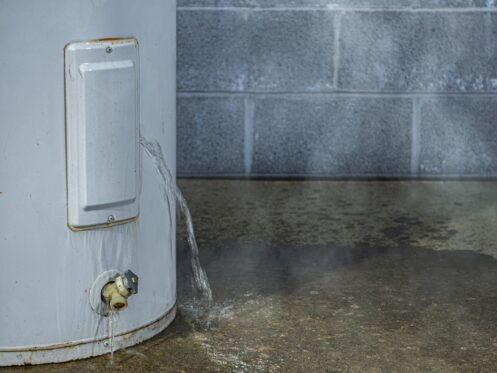
Even a small leak around your water heater’s base is concerning. Rust-colored water or corroded pipe fittings usually point to a tank that’s breaking down from the inside.
Some people catch this early through regular inspections, while others notice water pooling around the base of the tank or seeping into nearby flooring. If corrosion reaches the inside of the tank, there’s no real way to stop it. You’ll need a new water heater to avoid damage to your house.
Slow Recovery and High Utility Bills
When you notice your showers getting cold quickly and your power bills increasing, your water heater could be the culprit. If the system takes longer to reheat water or seems to be cycling more often, it’s probably working less efficiently than it used to. Over time, that constant strain shows up on your electric or gas bills.
You might find yourself adjusting the temperature higher just to get a consistent hot water experience. This leads to more wear and tear.
In electric units, burned-out heating elements often get replaced without addressing the deeper issue: that the tank itself may be near the end of its useful life. Gas water heaters may develop inefficient pilot lights or struggle with airflow if their burners are clogged. Either way, high energy use without strong performance suggests the system isn’t worth keeping much longer.
New Demands That Old Systems Can’t Meet
Your hot water needs may change over time. If you’ve added a bathroom to your home, or you frequently have guests staying with you, your old water heater might not be able to keep up. While this isn’t a defect, there may be a mismatch between your current needs and what the system was designed to handle.
Instead of waiting for your water heater to fail during a busy week, you can swap it on your terms. If your household uses a lot of hot water, something bigger or a tankless setup could be a better option. Systems with higher efficiency ratings also help offset the energy used to support expanded routines.
Waiting for Failure vs. Planning Ahead
If you wait for your water heater to fail completely before replacing it, the timing is rarely convenient. Most people discover an issue when they’re in the middle of a shower or standing in a pool of water in their basement.
Planned replacements give you the opportunity to choose the best model for your needs, schedule the work at a convenient time, and potentially save money by skipping emergency labor costs.
This is also a chance to think about energy efficiency and long-term savings. Newer units include better insulation, smarter controls, and faster recovery times compared to older models. Choosing a replacement before your tank quits gives you the opportunity to compare brands, weigh fuel types, and plan any necessary plumbing upgrades without a quickly approaching deadline.
Choosing the Right Replacement
You have several options when it comes to water heater replacement. If you’ve been using a traditional tank-based model, you might want to stick with what’s familiar. Modern versions offer better insulation and use energy more efficiently than older models, even at similar sizes. If you’re switching to tankless technology, you’ll want to think about things like flow rate, fuel source, and the number of hot water taps running simultaneously.
Hybrid systems combine heat pump technology with a storage tank to deliver efficient heating with familiar storage. These systems may take up a little more space but save money on operating costs. Whatever route you choose, make sure it suits your household’s hot water usage and your home’s plumbing layout.
Maintaining Your New Water Heater
Once your new water heater is installed, taking care of it can help extend its life and reduce the need for repairs. Flushing sediment from the tank every year helps keep heating elements efficient and prevents clogs that shorten recovery times. Tankless models benefit from descaling, especially in areas where water has a high mineral content.
We can routinely inspect your anode rod, a small internal part that slows down corrosion inside the tank. Replacing that rod before it breaks down can keep your tank from rusting prematurely. Temperature settings matter, too. Keeping your water heater set to 120 degrees Fahrenheit gives you safe, reliable hot water without running the system more than necessary.
Checking the pressure relief valve once or twice a year is also important. That small component acts as a fail-safe in case of overheating or excess pressure buildup. Making small maintenance efforts each season will help your new system last longer, perform better, and stay in line with your energy use goals.
Replace Your Water Heater Today
In many cases, investing in a new water heater before the old one fails can protect your home from leaks or high water heater repair costs. In addition to water heater installation, we handle pipe replacements and plumbing system updates that work better with high-efficiency models. If you’re starting to second-guess your water heater, it might be time to consider replacing it.
Schedule a replacement or inspection today with our team here at Bill Metzger Plumbing in San Clemente.



 Today
Today